

The Ban List
"Premodern is defined as much by what is missing as what is present. The ban list on this website strictly follows premodernmagic.com."
The Entire List
33 Cards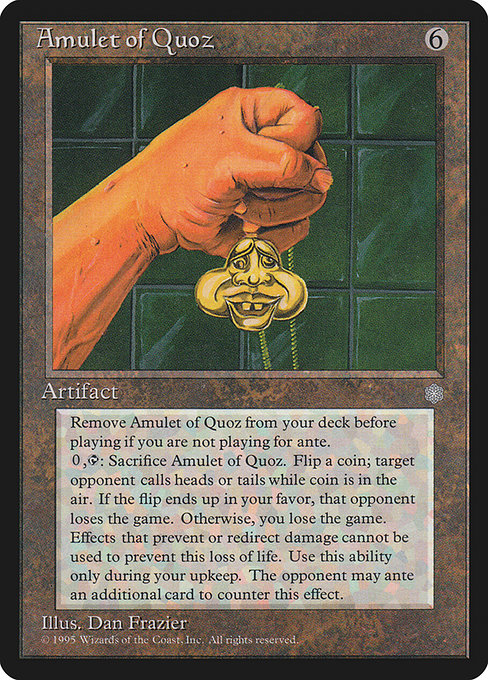
Banned
"Ante card"
Banned
"Ante card"
Banned
"Ante card"
Banned
"Ante card"
Banned
"Ante card"
Banned
"Ante card"
Banned
"Extreme power level and symmetry-breaking resource denial."
Since 2018
"Format identity — keeps Premodern distinct from Legacy."
Banned
"Enables turn 1 kills that are non-interactive."
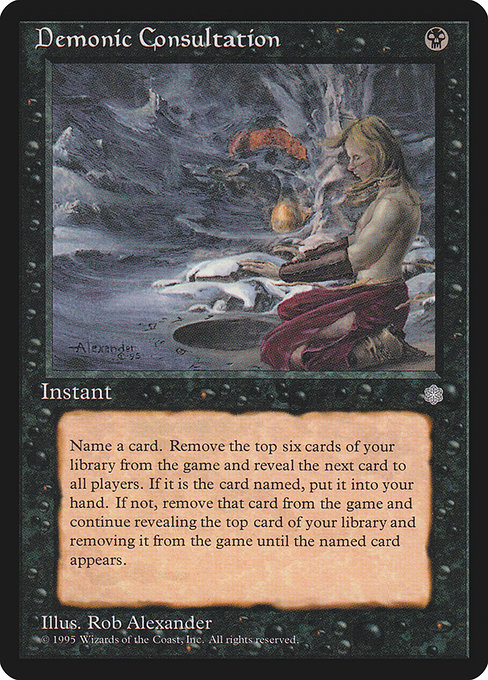
Banned
"Excessive consistency for combo decks."
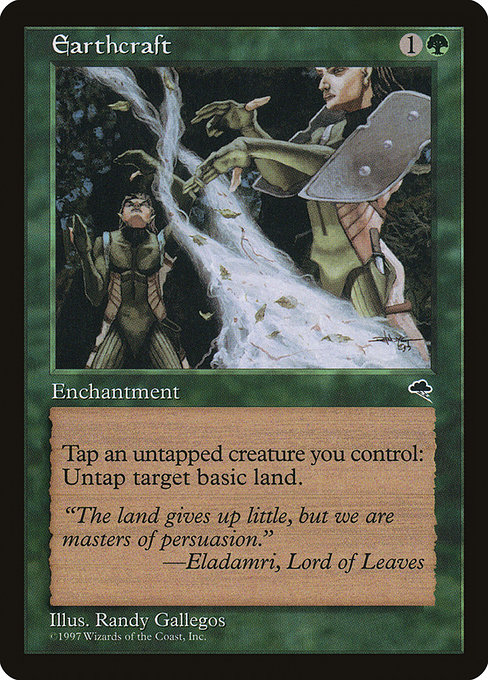
Banned
"Enables infinite loops with Squirrel Nest."
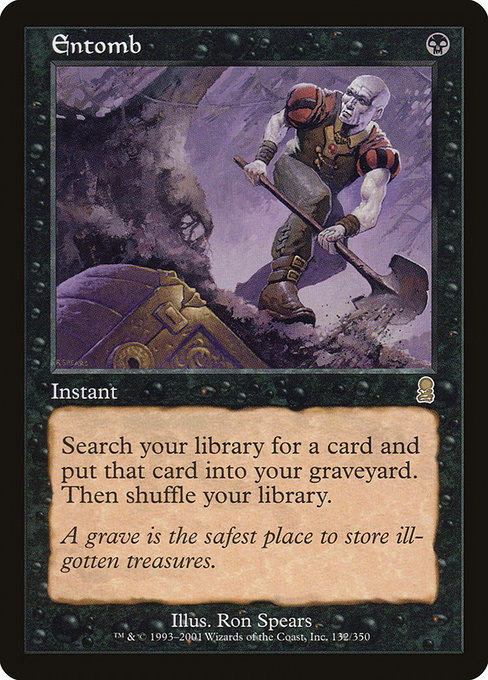
Banned
"Excessive efficiency for reanimation strategies."
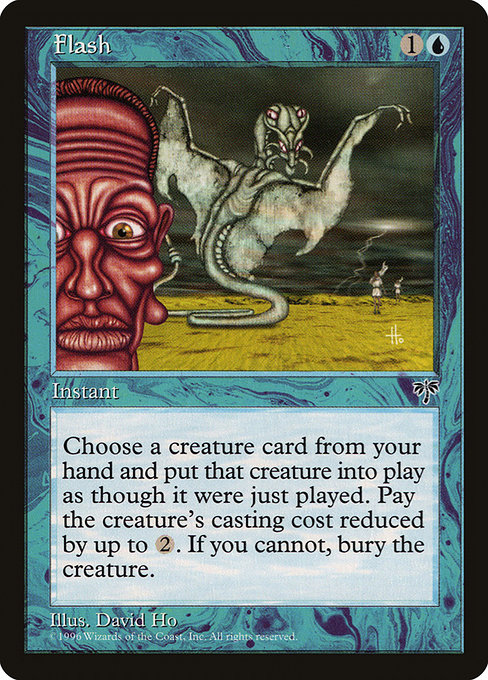
Banned
"Enables instant-speed win conditions at a very low cost."
Banned
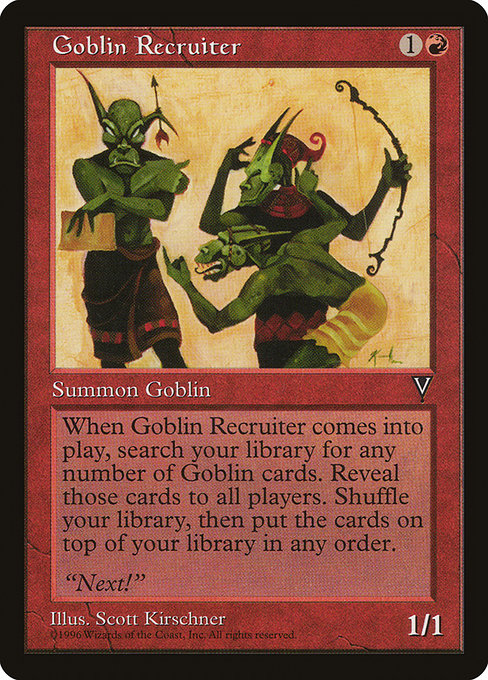
"Enables one-card combo kills with Goblin Charbelcher or Ringleader."
Banned
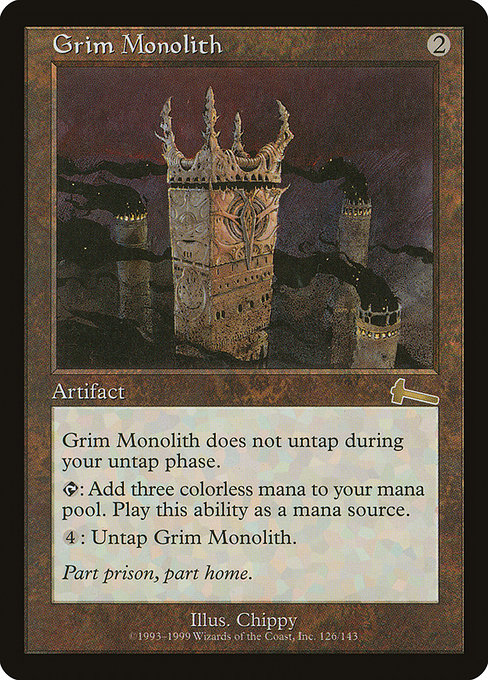
"Extreme burst of fast mana."
Since 2023
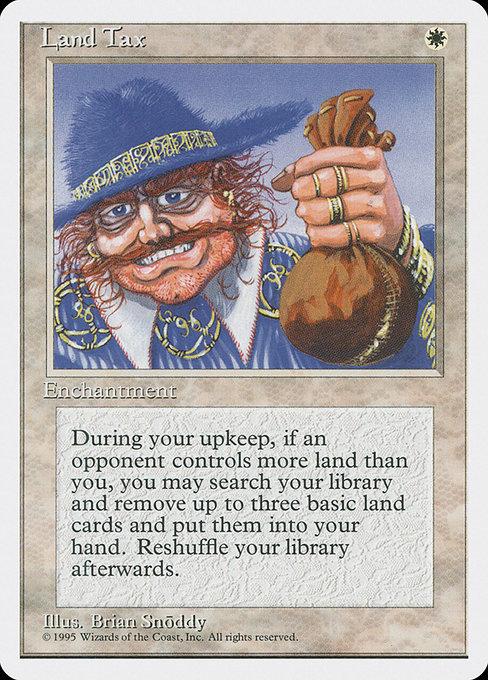
"Excessive resource advantage for one mana."
Banned
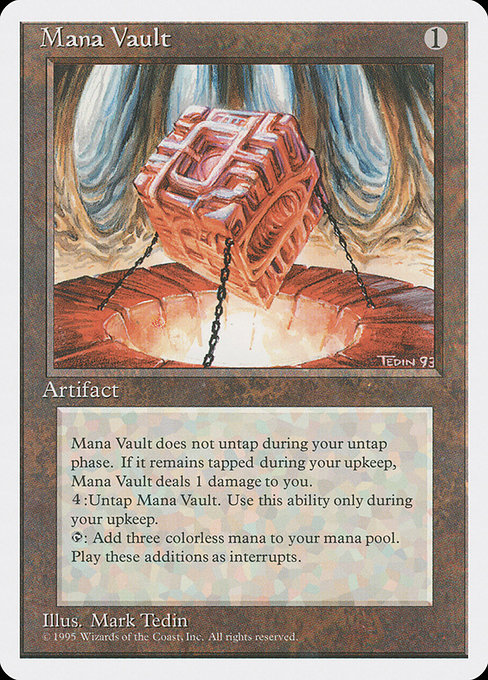
"Extreme burst of fast mana."
Banned
"Enables degenerate 'draw-your-whole-deck' combo turns."
Banned
"Non-interactive hand destruction."
Banned
"Premier storm enabler."
Banned
"Ultra-efficient tutor for spells."
Banned
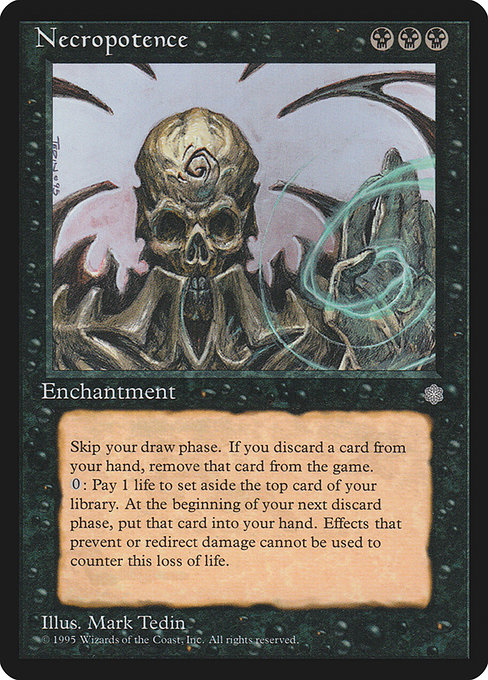
"The most powerful draw engine ever printed."
Since 2026
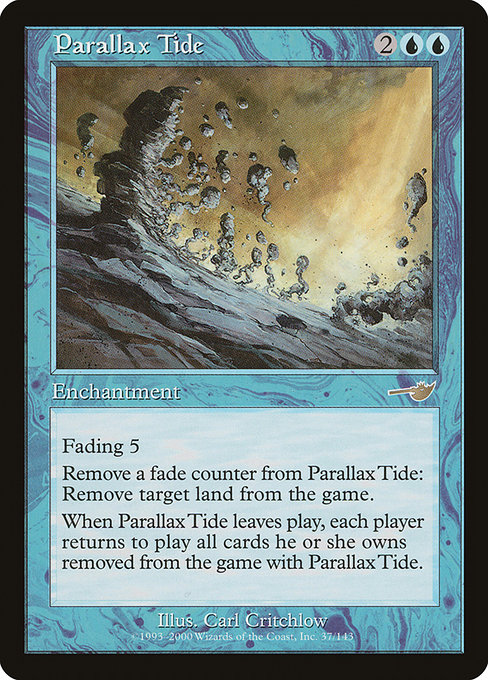
"Oppressive resource denial, especially with Replenish."
Banned
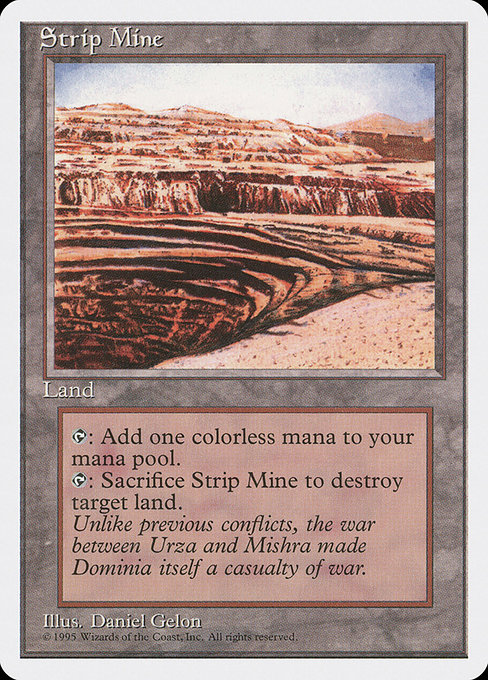
"Oppressive land denial that hits basics."
Banned
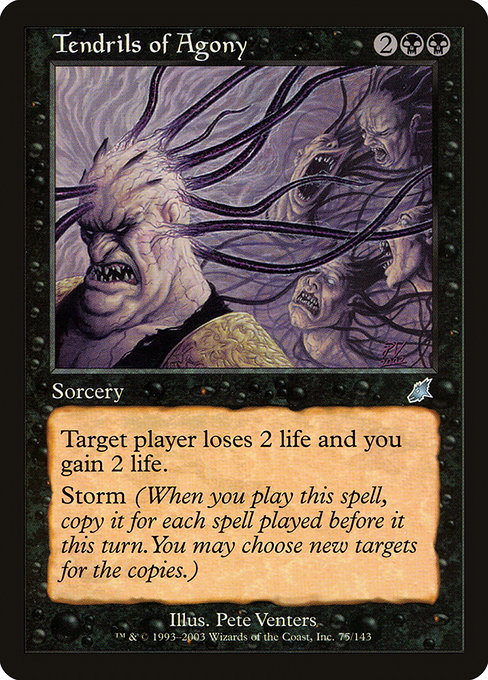
"Primary storm finisher."
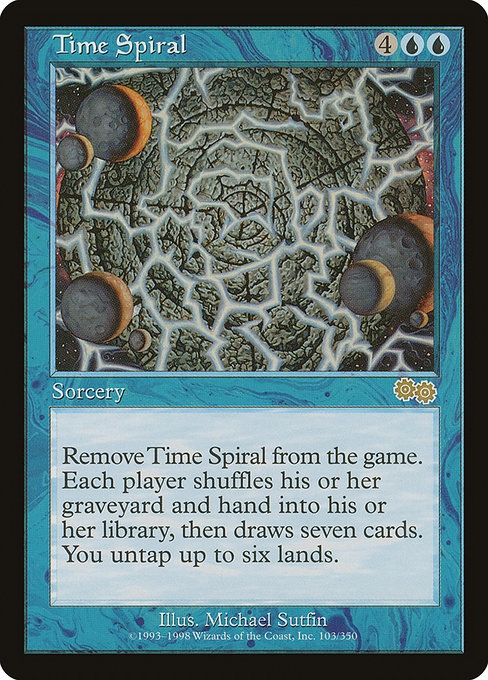
Banned
"Free draw-seven that untaps lands."
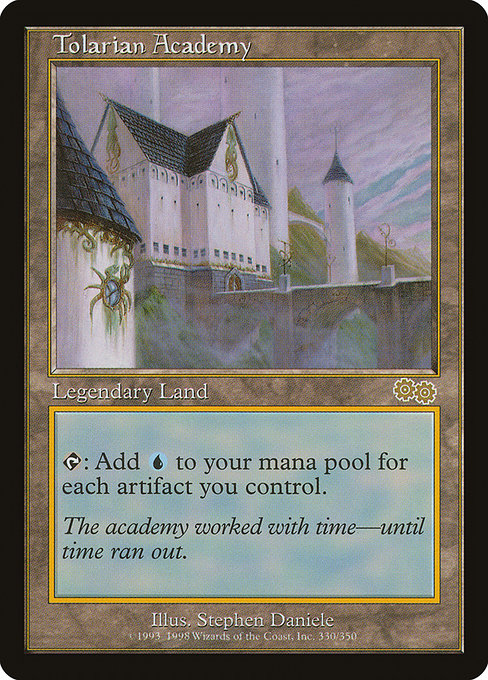
Banned
"Generates massive amounts of mana in artifact decks."
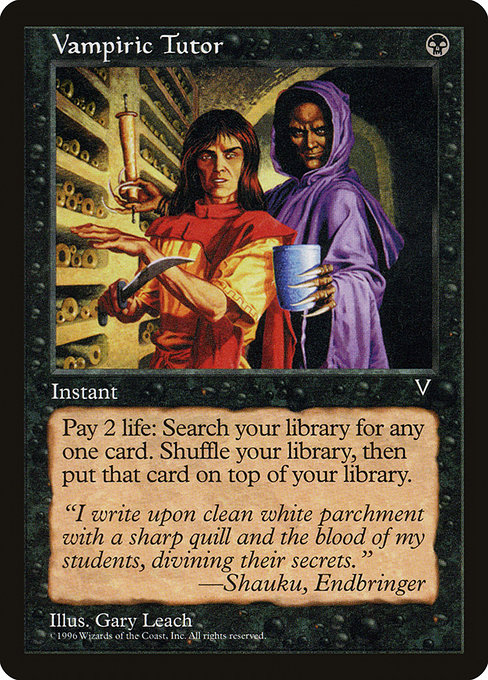
Banned
"The best tutor in the format's era."
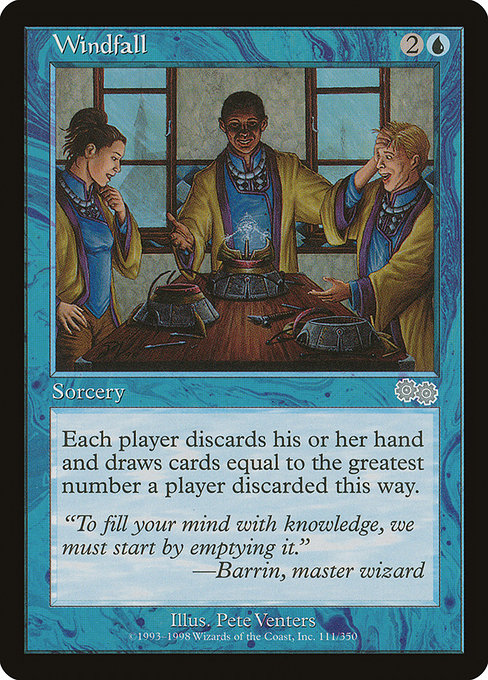
Banned
"Efficient draw engine that scales with hand size."
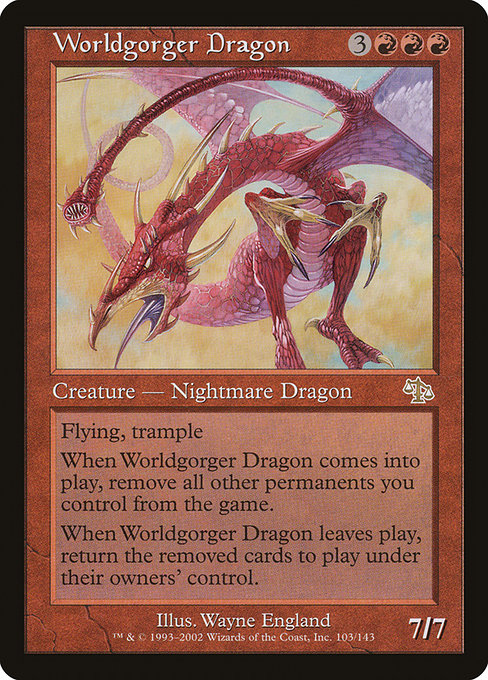
Banned
"Enables infinite mana/ETB loops."
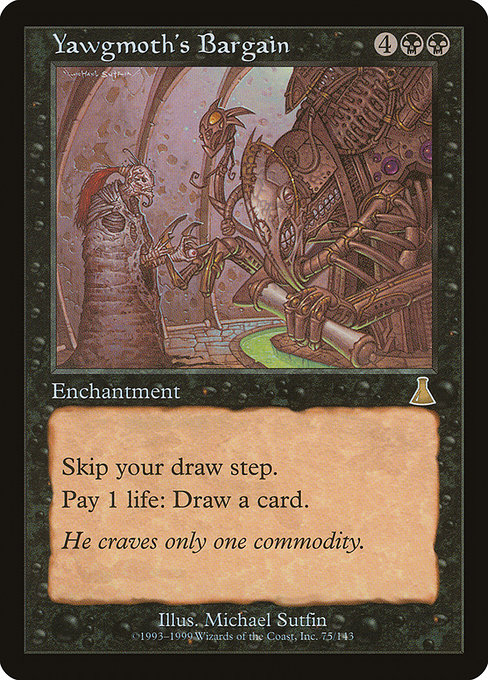
Banned
"Broken draw engine variant of Necropotence."
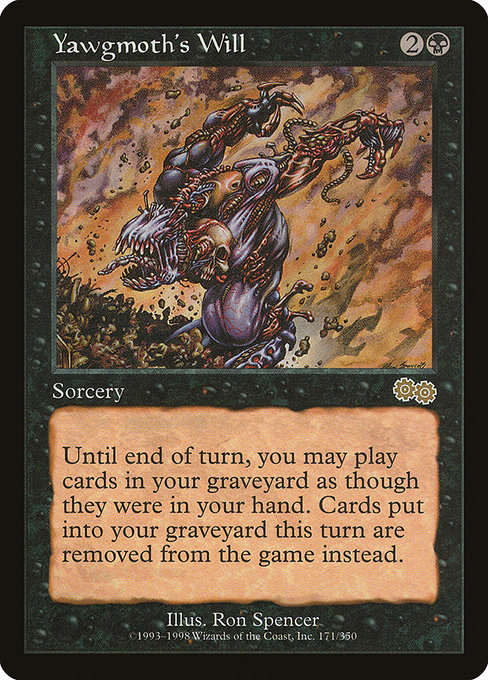
Banned
"Enables extreme recursion and combo turns."
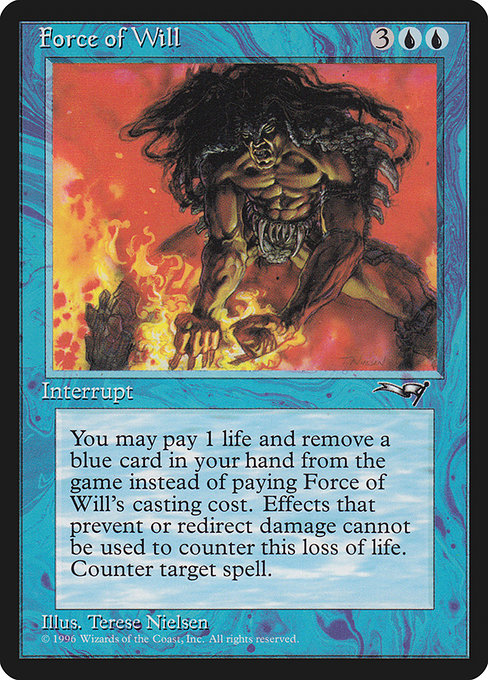
Banned
"Format identity — keeps interaction mana-dependent."
The Banned Files
Deep dives into the format's most notorious exclusions
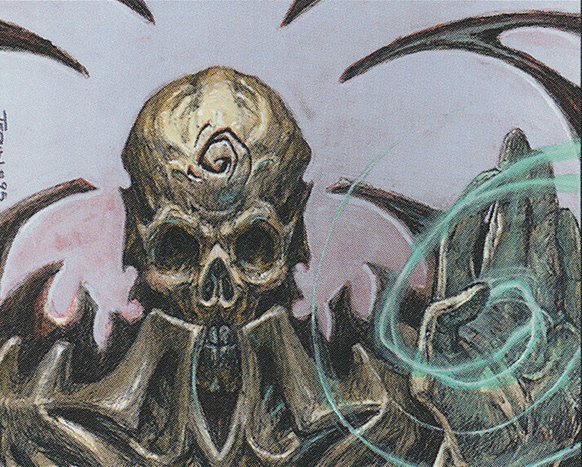
The Skull: A Legacy of Greed
Necropotence
Perhaps the most iconic banned card, Necropotence defined an entire era of Magic. In Premodern, its ability to trade life for cards at a 1:1 ratio is simply too efficient for a format meant to be interactive.
"Remains banned for the sake of diversity. Without it, the format flourishes with various midrange and control strategies."
Yawgmoth's Win
Yawgmoth's Will
Known as 'Yawgmoth's Win', this card allows a player to replay their entire graveyard. In a format with Dark Ritual and Lion's Eye Diamond, it enables degenerate combo turns that are impossible to interact with for most decks.
"Strictly banned. The power level is simply too high for a 'Golden Era' experience."
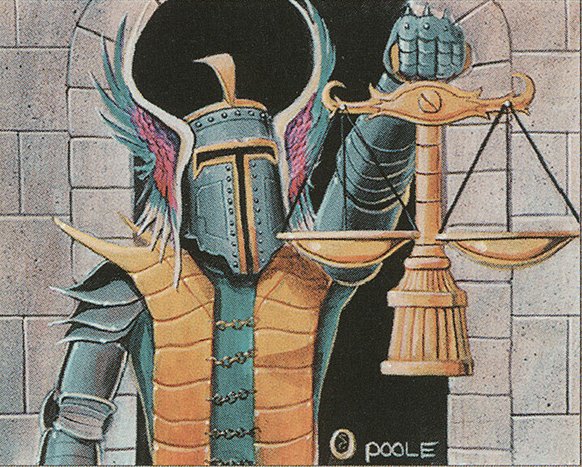
The Great Equalizer
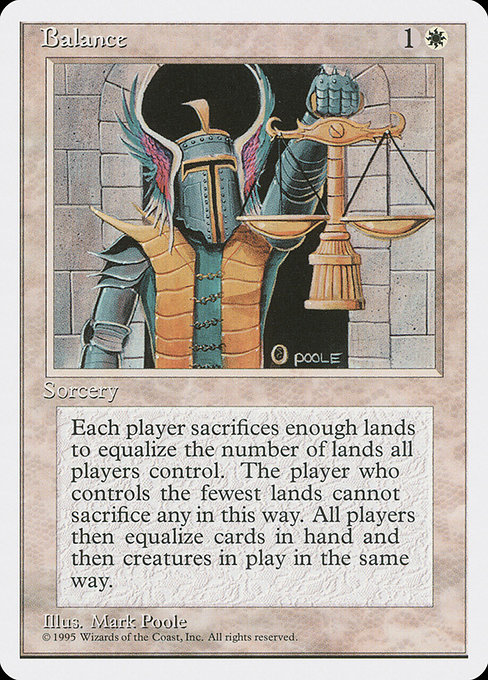
Balance
Balance is anything but balanced. For two mana, it can act as a board wipe, a Mind Twist, and a mass land destruction spell all in one. It punishes players for playing the game.
"Banned. Interaction is the core of Premodern, and Balance removes the opponent's ability to interact entirely."

The Last Gamble
Amulet of Quoz
Amulet of Quoz turns a game of Magic into a coin-flip wager on ante — a mechanic outlawed in all sanctioned play. It is banned in Premodern by definition, not by power level.
"Banned: ante cards are illegal in tournament Magic and have no place in Premodern."
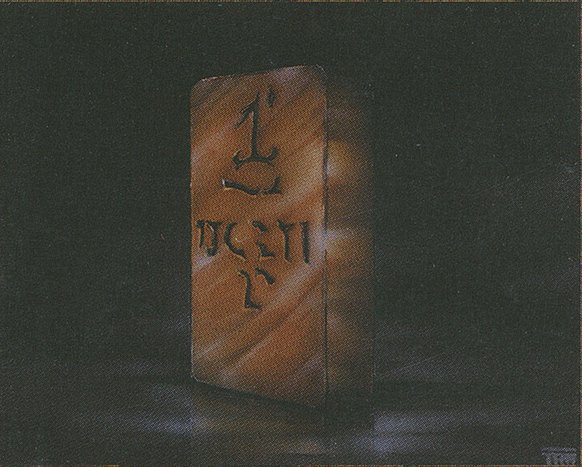
A Wager in Bronze
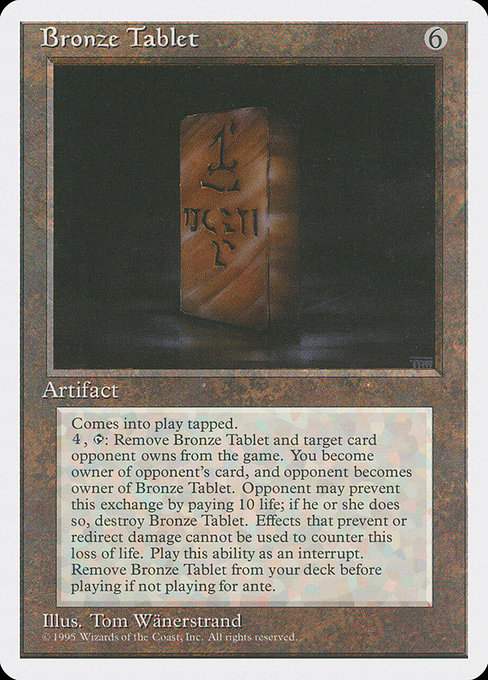
Bronze Tablet
Bronze Tablet lets players trade cards through ante, a mechanic banned from sanctioned Magic. Premodern excludes it alongside every other ante card.
"Banned: ante mechanics are not legal in tournament Magic."
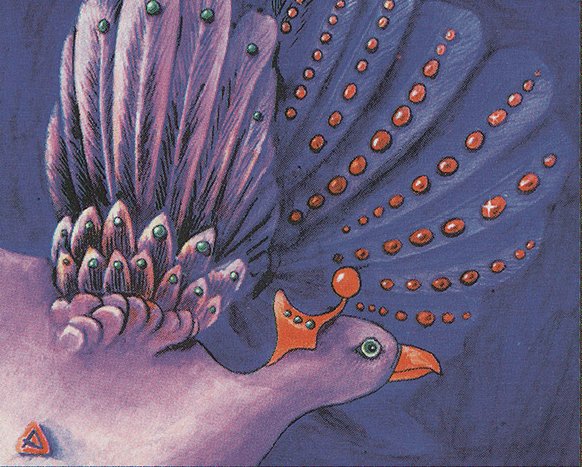
Ante, Feathered
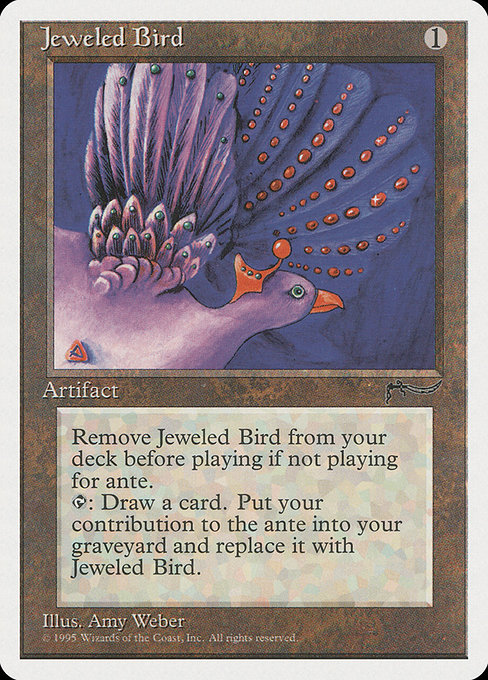
Jeweled Bird
Jeweled Bird swaps itself into the ante and draws a card, a function built entirely around the outlawed ante mechanic. It is banned in Premodern as a matter of rules, not balance.
"Banned: ante cards are prohibited in tournament Magic."
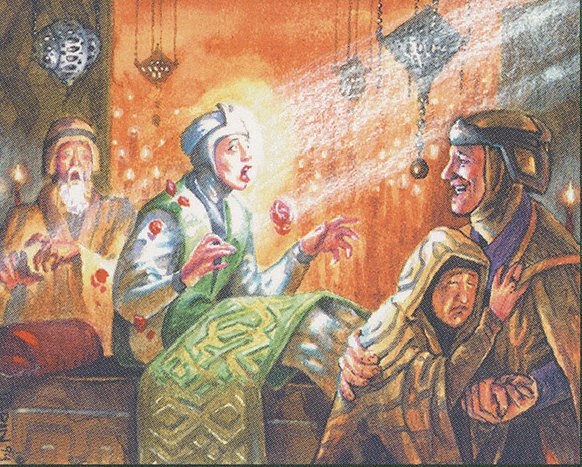
Stakes Reset
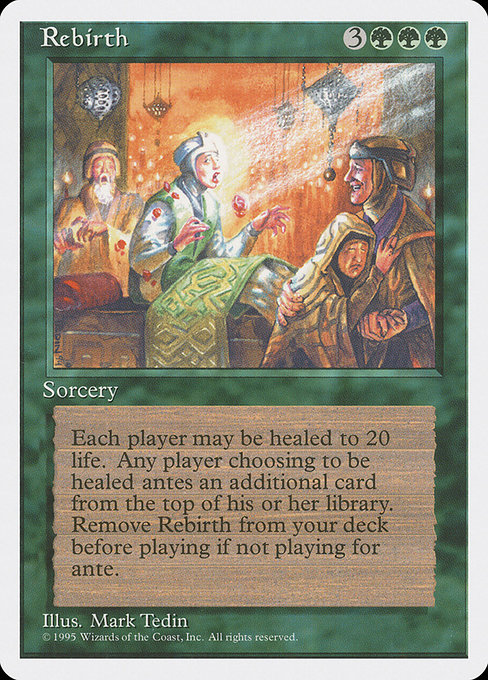
Rebirth
Rebirth resets life totals and interacts with ante, a mechanic banned from sanctioned Magic. Premodern excludes it on rules grounds.
"Banned: tied to the illegal ante mechanic."

A Genie's Bargain
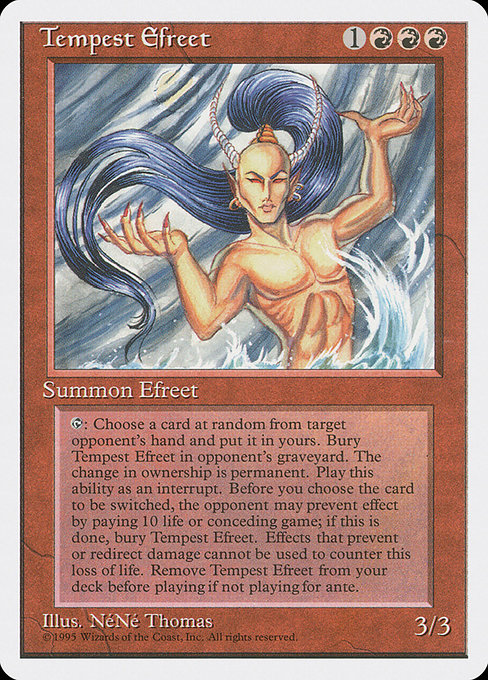
Tempest Efreet
Tempest Efreet can take a card from the opponent's deck via ante — a mechanic outlawed in sanctioned Magic. It is banned in Premodern by rule.
"Banned: ante cards are illegal in tournament Magic."

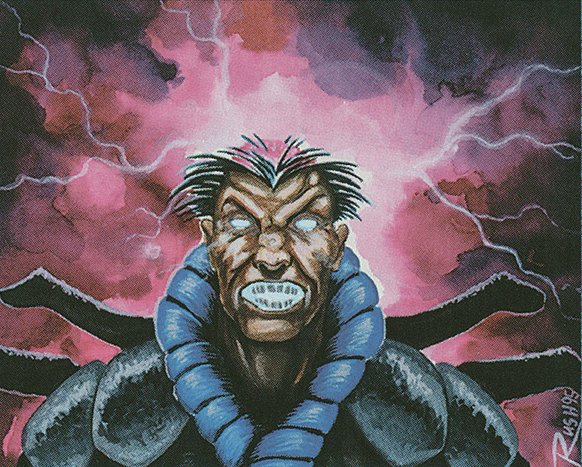
Demons of the Ante
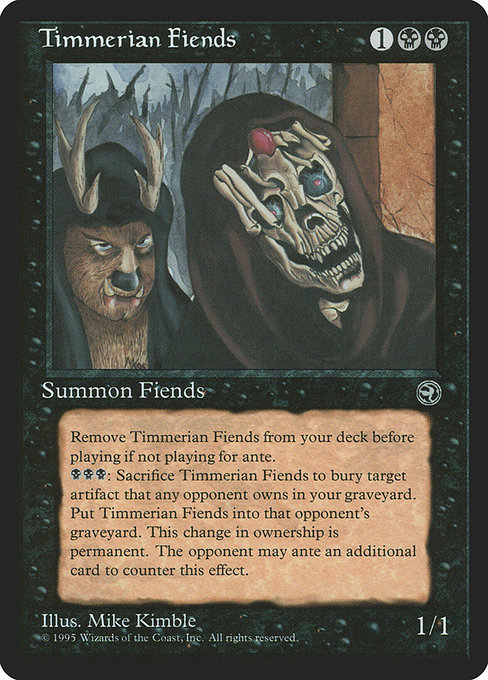
Timmerian Fiends
Timmerian Fiends exists to manipulate the ante, a mechanic banned from all sanctioned Magic. Premodern excludes it as a matter of rules.
"Banned: built around the illegal ante mechanic."
Brainstorm: The Line in the Sand
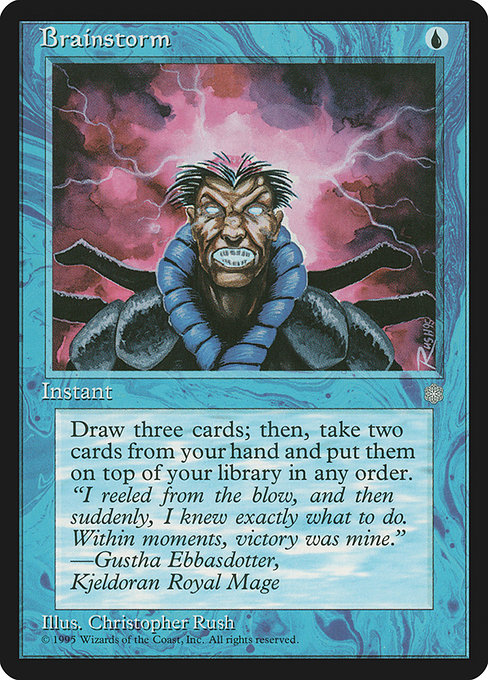
Brainstorm
A one-mana instant that draws three and tucks two back is the defining cantrip of blue control and combo, and Premodern bans it not for raw brokenness but to draw a hard boundary against Legacy. Within the 4th Edition-through-Scourge pool, Brainstorm fuels the same fetch-and-shuffle, dig-for-the-answer engines that dominate eternal formats, threatening to collapse Premodern's deck diversity into a sea of blue. The card's smoothing of draws is simply too potent for a format built around fairer, more interactive games of attrition.
"Banned to keep Premodern its own format and stop blue cantrip engines from homogenizing the metagame the way they do in Legacy."
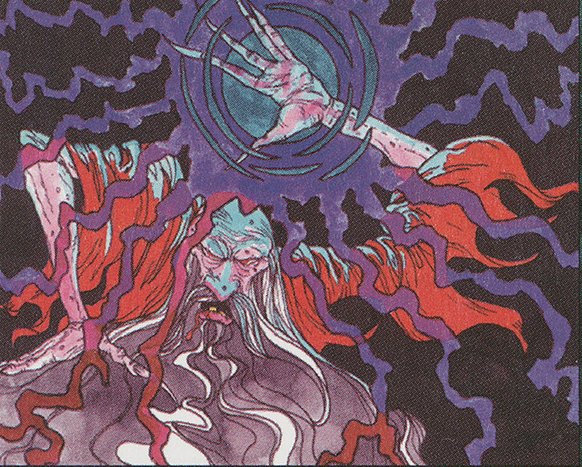
Channel: Life Is Just More Mana
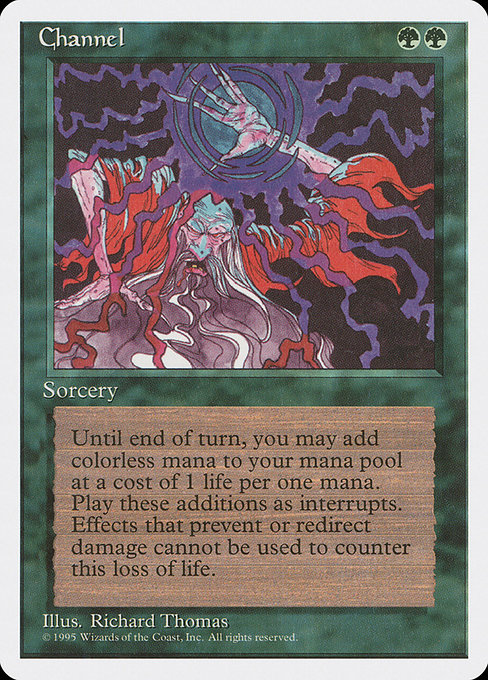
Channel
Channel turns your life total into colorless mana at a brutal one-for-one rate, collapsing the entire mana curve into a single explosive turn. In a format built around fair creatures, counterspells, and incremental advantage, a card that funds a turn-one kill or an out-of-nowhere bomb before the opponent acts violates Premodern's core promise of an interactive game. The payoff is non-negotiable: by the time it resolves, the game is frequently already decided.
"Banned: a degenerate life-to-mana engine that enables non-interactive turn-one wins with no place in a fair, interactive format."
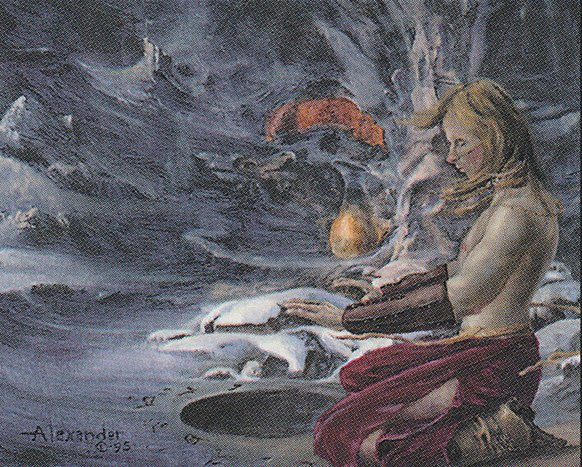
Demonic Consultation: Six Cards Off the Top
Demonic Consultation
For a single black mana, Demonic Consultation is an unconditional tutor that fetches any card in your deck, paid for by exiling the top six cards and then exiling every other card revealed until you hit the one you named. In Premodern's slower, interaction-based metagame, that one-mana consistency lets combo decks assemble their kill (most notably via storm/Doomsday-adjacent engines and reanimator setups) far too reliably, collapsing the variance that keeps non-blue tutoring honest. The trivial cost makes the format's answers irrelevant because the combo player simply finds the missing piece on turn one or two.
"Banned: a one-mana "find anything" tutor gives combo too much consistency for an interactive format to police."
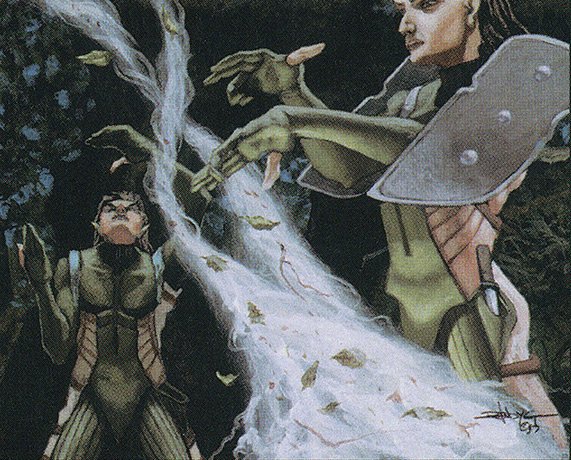
Earthcraft: The Squirrel Engine
Earthcraft
Earthcraft lets you tap any untapped creature to untap a basic land, and paired with Squirrel Nest it forms a clean two-card infinite engine: a basic land enchanted by Squirrel Nest taps to make a 1/1 Squirrel, Earthcraft taps that Squirrel to untap the land, and the loop repeats for an unbounded swarm of Squirrels. In a format built around fair creature decks and slow, interactive games, a cheap deterministic kill that assembles from two enchantments — both squarely in the legal pool — warps the metagame far beyond Premodern's intended power level. The combo is too compact and too hard to interact with for a format that prizes grindy, board-centric play.
"Banned: a two-card, in-pool infinite loop with Squirrel Nest that is too cheap and resilient for an interaction-first format."
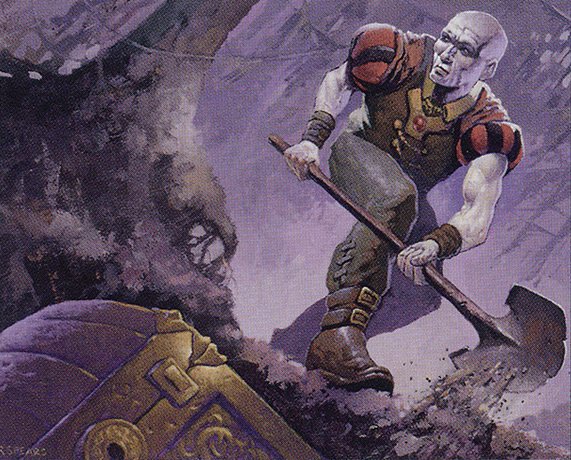
Entomb: One Mana to the Graveyard
Entomb
For a single black mana at instant speed, Entomb tutors any card directly into your graveyard, turning the hardest part of a reanimator deck — getting a fatty into the bin — into a near-free action. In Premodern's slower, more grindy power band, that efficiency collapses the combo: a turn-one Entomb into a turn-one or turn-two Reanimate or Exhume drops a Verdant Force, Spirit of the Night, or other bomb onto the battlefield before opponents can deploy meaningful interaction. It is not a card that asks you to build toward a payoff; it simply hands you the payoff on the cheapest possible terms.
"Banned: a one-mana tutor that makes reanimator too fast and too consistent for a format built on interaction."
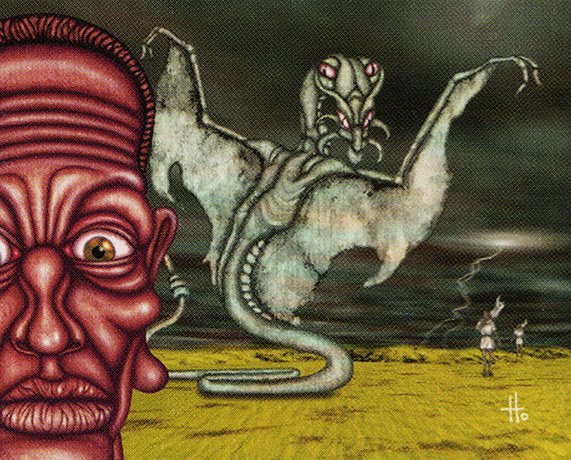
The Loophole Engine: Instant-Speed Creatures, Hidden Costs
Flash
Flash is a two-mana instant ({1}{U}) that lets you put a creature card from your hand straight into play at instant speed — then either pay that creature's mana cost reduced by {2} or sacrifice it on the spot. That sacrifice clause is the trap: a creature can briefly enter play for almost nothing and immediately leave, firing whatever death or leaves-play trigger it carries. In a format defined by reactive, fair interaction (1995-2003 power level), assembling a payoff at flash speed on the opponent's end step sidesteps the sorcery-speed pacing the format relies on. The danger is not the card alone but how cheaply and instantly it stages a creature whose departure trigger does the real work, leaving opponents no window to respond on their own terms.
"Banned: a two-mana instant that stages creatures into play at flash speed — then sacrifices them to fire death triggers — breaks the format's sorcery-speed, fair-interaction social contract."
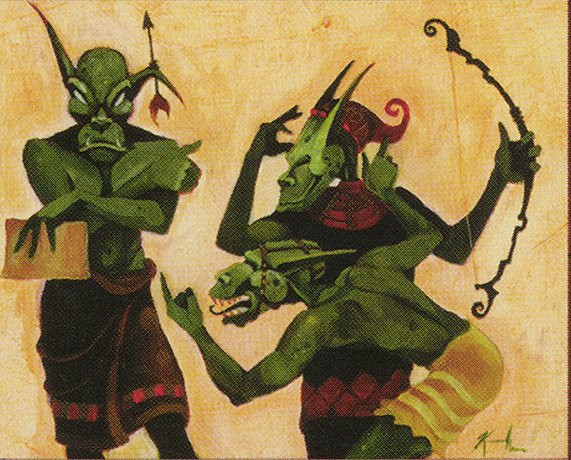
The Stacked Deck: Goblins on Demand
Goblin Recruiter
For just 1R, Goblin Recruiter tutors any number of Goblins straight to the top of your library in the exact order you choose, converting a fair tribal deck into a deterministic combo engine. In a format built on the variance and back-and-forth of mid-90s tribal aggro, freely arranging the top of your library is simply too much consistency: it removes the draw-step gamble that keeps Goblin mirrors and matchups interactive. Chained into Goblin Ringleader, it lets you replay half your deck and assemble explosive, near-unbeatable starts that no Premodern-legal answer is meant to keep pace with.
"Banned for handing a fair tribe an unfair, deck-stacking tutor that breaks Premodern's interactive, variance-driven game plan."
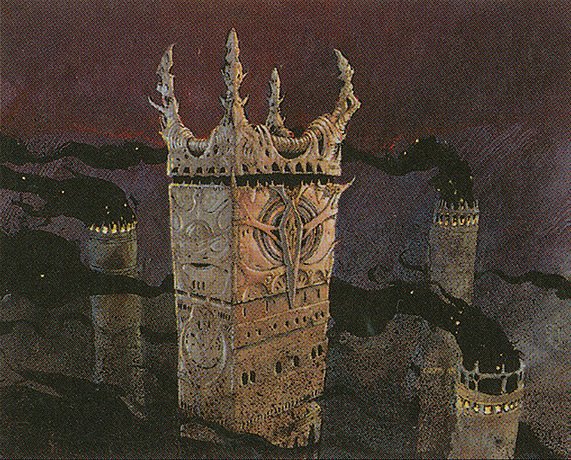
The Engine of Ruin: Two Mana for Four
Grim Monolith
Grim Monolith taps for three colorless and untaps for just 4 mana, turning a 2-mana artifact into an explosive ramp engine that powers out threats and lock pieces turns ahead of a fair curve. In a format built around colored mana, modest creatures, and the give-and-take of the early turns, this kind of acceleration collapses the interaction window opponents are supposed to have. Paired with Power Artifact it loops infinite colorless mana, and even without combos it simply lets one player skip the game everyone else is playing.
"Banned for delivering an extreme burst of fast mana that breaks Premodern's intended tempo and interaction."

Land Tax: The One-Mana Library
Land Tax
For a single white mana, Land Tax sits on the battlefield and, on each of your upkeeps when an opponent controls more lands than you, fetches up to three basic lands from your library to hand, refilling your grip turn after turn at almost no cost. In Premodern's grindy, fair-deck environment that asymmetry is brutal: it both thins your deck (boosting topdecks) and fuels engines like Scroll Rack, which recycles the lands back atop your library for fresh cards each turn. An enchantment that generates relentless, uninteractive resource advantage for one mana warps the format toward a single dominant control engine.
"Banned: a one-mana enchantment that delivers excessive, repeatable card advantage that fair Premodern decks cannot interact with."
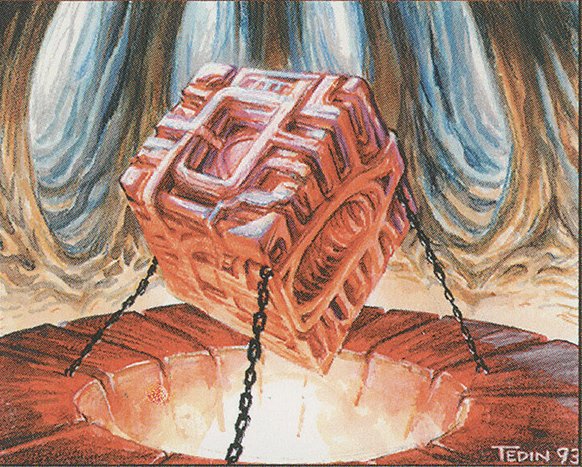
The Vault: Free Acceleration With No Brakes
Mana Vault
A one-mana artifact that immediately taps for three colorless mana, Mana Vault turns turn one into a turn-three mana base for a single card, powering out threats long before opponents can answer them. The deferred drawback (it stays tapped through your untap step and deals 1 damage to you each upkeep unless you pay 4) is a cost a combo or fast deck happily ignores once it has already won. In a format built on the early-2000s interaction baseline, that kind of repeatable, color-free burst warps the first turns of the game beyond what fair decks can keep up with.
"Banned as fast mana: the burst is too explosive and too consistent for Premodern's interaction-based power level."
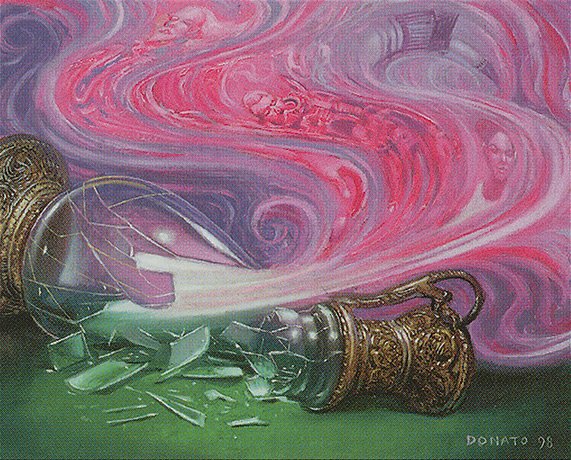
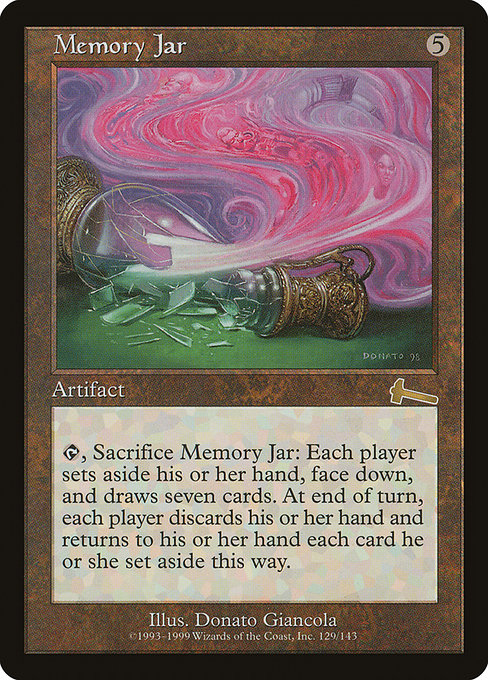
The Jar: Free Refills, Empty Decks
Memory Jar
Memory Jar is a 5-mana artifact that taps and sacrifices to make every player exile their hand and draw seven, with the new hands discarded and the originals returned at the next end step — a one-shot, symmetrical refill rather than a Wheel of Fortune you keep around. In Premodern's free-artifact/storm-adjacent shells it becomes an engine rather than a fair card-advantage tool: searched up by Tinker, returned and re-sacrificed by Goblin Welder, it refuels a turn that draws and chains a huge fraction of the deck. The format's pre-2003 card pool simply lacks the cheap, reliable interaction needed to punish a combo player who can manufacture multiple fresh seven-card hands in a single turn.
"Banned: in a format defined by interactive, fair midrange play, a sacrifice-fueled seven-card refill that powers deck-emptying combo turns is exactly the non-interactive engine Premodern exists to keep out."
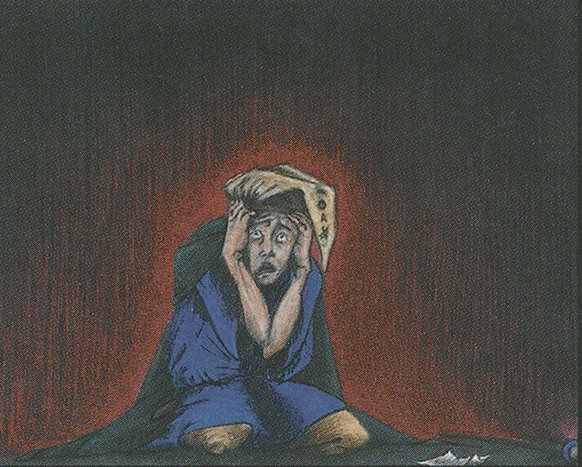
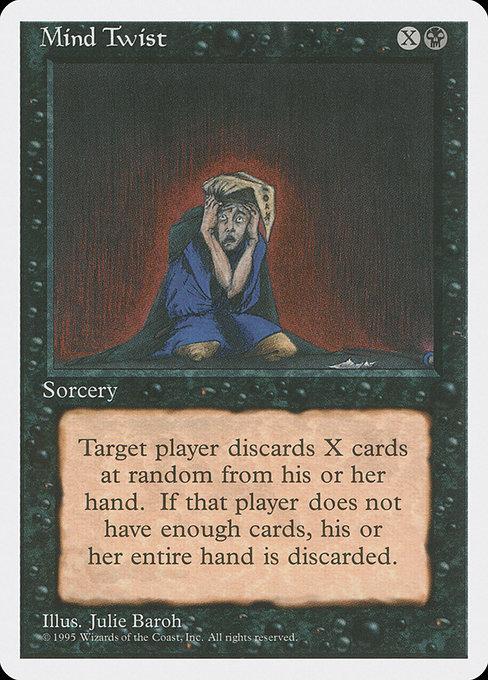
Mind Twist: The Empty Hand
Mind Twist
For B and X generic mana, Mind Twist forces the opponent to discard X cards at random, scaling with every extra mana invested. Accelerated by Dark Ritual and other fast black mana, it can empty a hand on turn two or three with no answer once the spell resolves, leaving the victim drawing off the top while the caster still holds a full grip. That degree of non-interactive, snowballing card destruction sits far above what Premodern's grindy, board-developing games are built to absorb.
"A turn-three "discard your hand" with no interaction has no place in a format that rewards playing the game — banned."

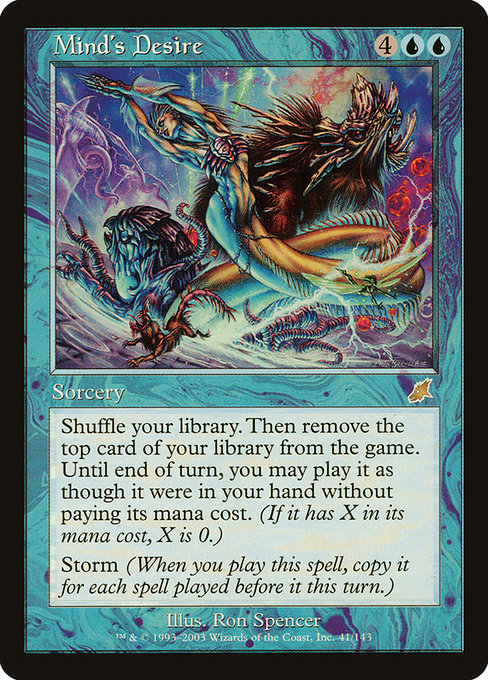
The Genie's Gambit: Storm in a Bottle
Mind's Desire
Mind's Desire reads "shuffle your library, then play the top X cards for free," where X is your storm count, making it a one-card explosion that converts a turn of cheap rituals and cantrips into a cascade of free spells. In Premodern's ritual-rich pool (Dark Ritual, Cabal Ritual, Lion's Eye Diamond, Lotus Petal), a single resolved copy snowballs into more lands, more accelerants, and ultimately a lethal or game-locking payoff faster than any fair deck can interact. It rewards solitaire combo turns over the back-and-forth, interactive play the format is built to protect, so it sits at the heart of the storm ban package.
"Banned: a free-spell snowball that turns Premodern's abundant rituals into an uninteractive combo kill."

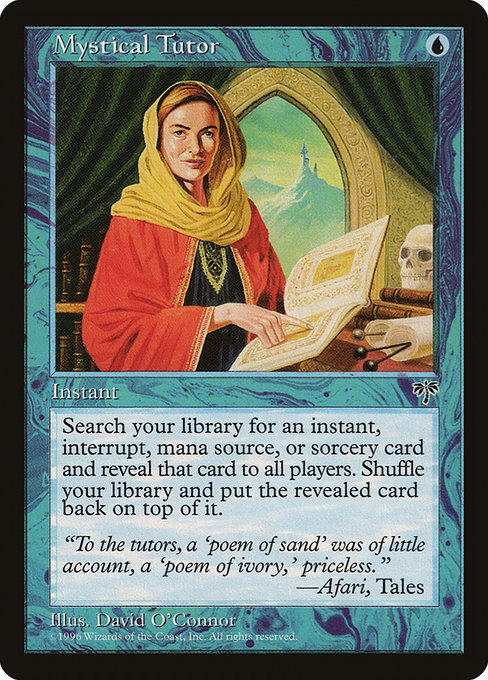
The One-Mana Oracle
Mystical Tutor
Mystical Tutor fetches any instant or sorcery to the top of your library for a single blue mana at instant speed, turning one slot into a toolbox answer for every situation. In a format defined by interactive, fair blue control and combo decks, that cheap, flexible consistency is the problem: it lets a deck reliably assemble degenerate lines or always have the perfect counter, removal, or finisher in hand. Premodern's power philosophy tolerates tutoring only when it is slow or costly, and a one-mana instant-speed search is simply too efficient for the era's card pool.
"Banned because a one-mana, instant-speed tutor for any instant or sorcery gives the format's combo and control decks unhealthy consistency that the era's interaction cannot keep pace with."
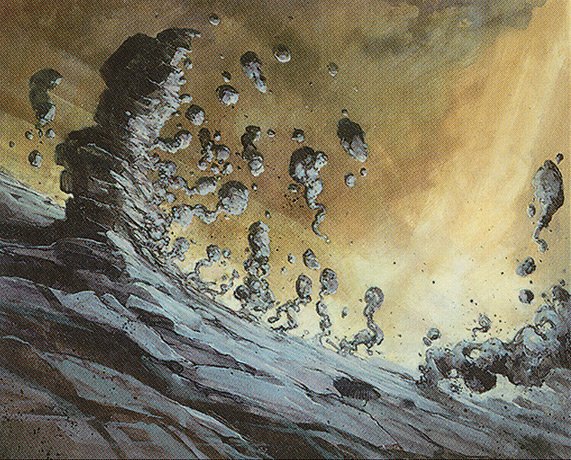
Parallax Tide: The Replenish Sinkhole
Parallax Tide
A four-mana blue enchantment that uses its fading counters to remove an opponent's lands from the game, only returning them if it ever leaves play. In a vacuum it is a soft tempo tool, but Premodern's deep mana-denial and enchantment-recursion shells weaponize it: paired with Replenish it can be looped back into play, permanently stripping an opponent of their lands and locking them out of the game entirely. That kind of non-interactive, repeatable resource starvation is exactly the play pattern the format's interaction-first philosophy refuses to tolerate.
"Banned as an oppressive land-denial engine whose Replenish loop turns a fair-looking enchantment into an inescapable mana lock."

Strip Mine: The Land That Says No
Strip Mine
Strip Mine is a colorless land that taps for mana yet sacrifices itself to destroy any land, including basics, for a net-zero mana investment. In a format where every deck runs basics and mana bases are deliberately fragile, that repeatable, color-free disruption lets aggro and control decks mana-screw opponents out of games before any real interaction happens. Premodern prizes grindy, decision-dense play, and a free land-for-land trade that costs no spell slot and hits the most basic resource undermines that entire premise.
"Banned: free, repeatable, colorless land destruction that punishes basic lands is too oppressive for an interactive format."
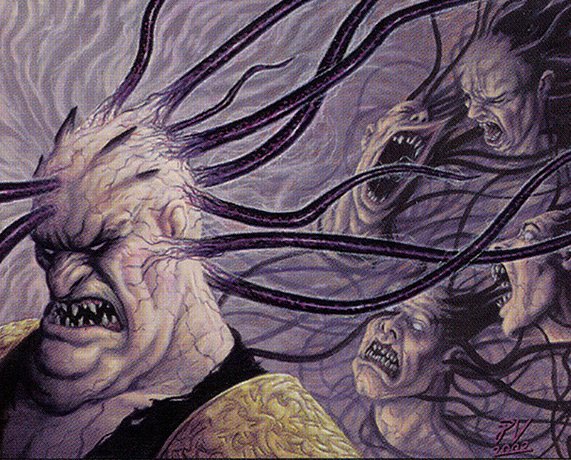
Tendrils of Agony: Death by a Thousand Spells
Tendrils of Agony
Tendrils is the payoff that turns a chain of cheap rituals and cantrips into a lethal Storm count, draining the opponent for two life per spell cast that turn. In a format built on the slower, more interactive combat and resource exchanges of the late-1990s/early-2000s, a deck that ignores the board entirely and kills on turn two or three through a deterministic combo loop warps deckbuilding and play patterns. Banning it removes Storm's only true one-card finisher, keeping the format's combo decks from becoming non-interactive solitaire.
"Banned because it is the single card that converts a fast, hard-to-disrupt ritual chain into a guaranteed kill, giving Storm a non-interactive finish the format cannot police."
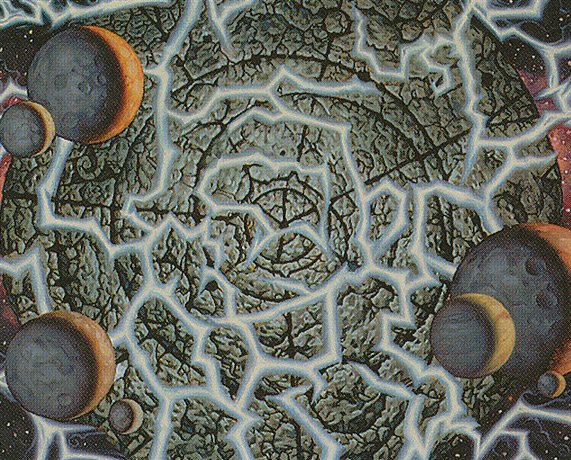
Time Spiral: The Free Refill
Time Spiral
Time Spiral is a Timetwister-style reset: every player shuffles their hand and graveyard into their library and then draws seven, and the caster untaps up to six lands in the bargain. That land rebate means it effectively refunds its own six-mana cost and leaves you with a fresh grip and mana up. In Premodern's interactive, two-color-good-stuff metagame, that turns it into a combo accelerant rather than a fair card-advantage spell: it reloads an empty hand mid-turn and powers explosive Urza-era engines that the format cannot reasonably answer. A spell that hands you a brand-new seven for "free" while leaving lands untapped is the textbook ceiling-breaker a 1995-2003 power level was never meant to police.
"Banned: a self-refunding Timetwister that untaps lands is a combo engine, not a fair card-draw spell."
The Academy: Combo Winter's Engine
Tolarian Academy
A Legendary Land that taps for blue mana equal to your artifact count, Tolarian Academy turns cheap artifacts like Lotus Petal, Lion's Eye Diamond, and the fast-mana rocks of the era into explosive, snowballing mana. In an artifact-heavy shell it routinely produces five or more mana from a single land on turn one or two, fueling Mind Over Matter, Stroke of Genius, and other game-ending payoffs far before an interactive deck can answer them. Premodern is built around grindy, fair midrange and combo with windows for disruption, and a one-card mana engine of this magnitude collapses those windows entirely.
"A single land that produces broken, repeatable fast mana has no place in a format that prizes fair, interactive games — banned."
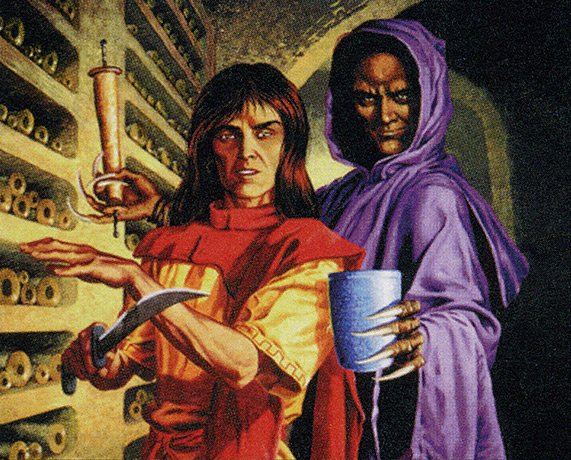
The Black Lotus of Tutors: One Mana to Find Anything
Vampiric Tutor
For a single black mana at instant speed, Vampiric Tutor finds any card in your deck and sets it atop your library, paying only 2 life. In a format built on creature combat and reactive interaction, that kind of frictionless consistency lets combo and toolbox decks assemble their best answer or kill piece every game, collapsing deck variance and homogenizing what would otherwise be a diverse metagame. The 2-life cost is a rounding error next to the power of turning every draw step into "draw exactly what you need."
"Banned because perfect, instant-speed, one-mana selection is simply too consistent for a format meant to reward interaction and variance over tutoring into the same broken lines every game."

Windfall: The Storm Before the Storm
Windfall
A two-mana sorcery that forces every player to discard their hand and draw cards equal to the largest hand discarded, Windfall is a symmetrical refill that the caster bends entirely in their favor. In a combo-leaning deck it converts a dead, dumped hand into a fistful of fresh resources for almost no cost, and the more cards an opponent is holding, the more the Windfall player draws. That kind of cheap, scaling card advantage hands degenerate "draw-and-go-off" strategies the fuel they need while giving the interactive player no meaningful way to tax or punish it.
"Too cheap and too explosive a card-advantage engine for combo decks, with no symmetry an interactive opponent can exploit — banned in Premodern."
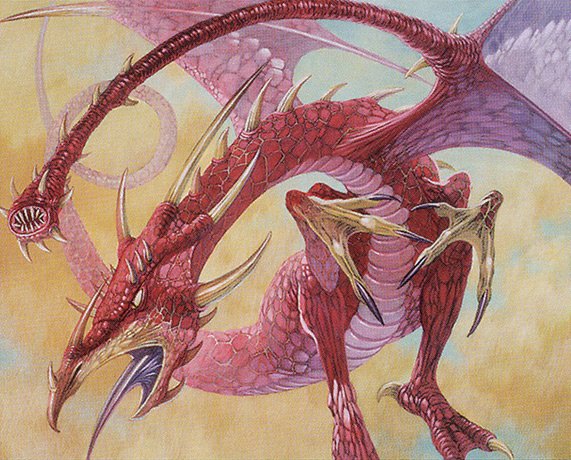
Worldgorger Dragon: The Engine That Ate the Format
Worldgorger Dragon
Animate Dead on Worldgorger Dragon creates a loop that exiles all your other permanents and returns them each cycle, with lands coming back untapped, letting you generate arbitrary mana or trigger ETBs as many times as you like before ending the loop to win. In Premodern's slow, fair, mana-light environment, that turns a couple of cheap reanimation spells into a combo kill as early as turn two with no real interactive counterplay on the stack. A two-card engine that ignores creature combat and life totals entirely is exactly the kind of deterministic, non-interactive win the format's philosophy is built to exclude.
"Banned because it converts cheap reanimation into a deterministic, uninteractive infinite-loop kill that the format's fair, combat-and-life-total ethos cannot police."
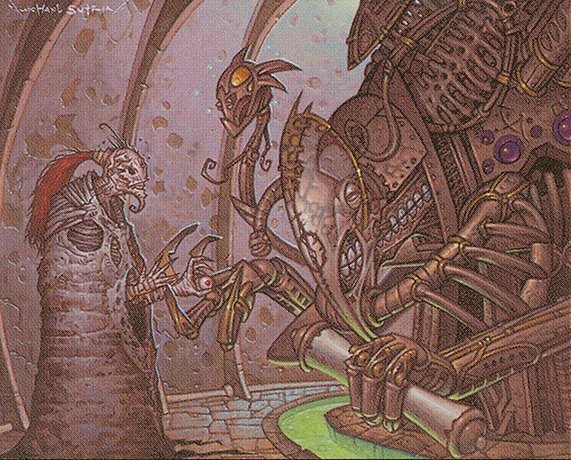
Yawgmoth's Bargain: Necropotence Without the Brakes
Yawgmoth's Bargain
Bargain takes the already-banned Necropotence engine and strips away its only real downside, letting you pay 1 life to draw a card immediately rather than exiling cards to a delayed end-of-turn pile. In a slow, interactive Premodern metagame where life totals are a renewable resource, that means a single uncontested turn converts your life cushion directly into a fistful of cards, fueling combo and ritual-storm starts no fair deck can answer. Like Necropotence before it, it warps games into a race against an unstoppable card-advantage spiral.
"A strictly more dangerous Necropotence that has no place in an interaction-driven format — banned, permanently."
Free Will: The Tax That Wasn't
Force of Will
Force of Will lets blue decks counter anything for zero mana by paying 1 life and pitching a blue card, untethering the format's premier interaction from the resource that is supposed to constrain it. In Premodern's deliberately slower, mana-bound metagame, a free hard counter warps deckbuilding and play patterns toward blue, letting combo and control protect their plans (or stop yours) without ever tapping out or falling behind on development. Banning it preserves the format's identity: interaction should cost mana, so that tapping out, sequencing, and resource trades remain real decisions rather than a foregone "no."
"Banned to keep interaction honest — in Premodern, saying "no" must cost mana."